
01
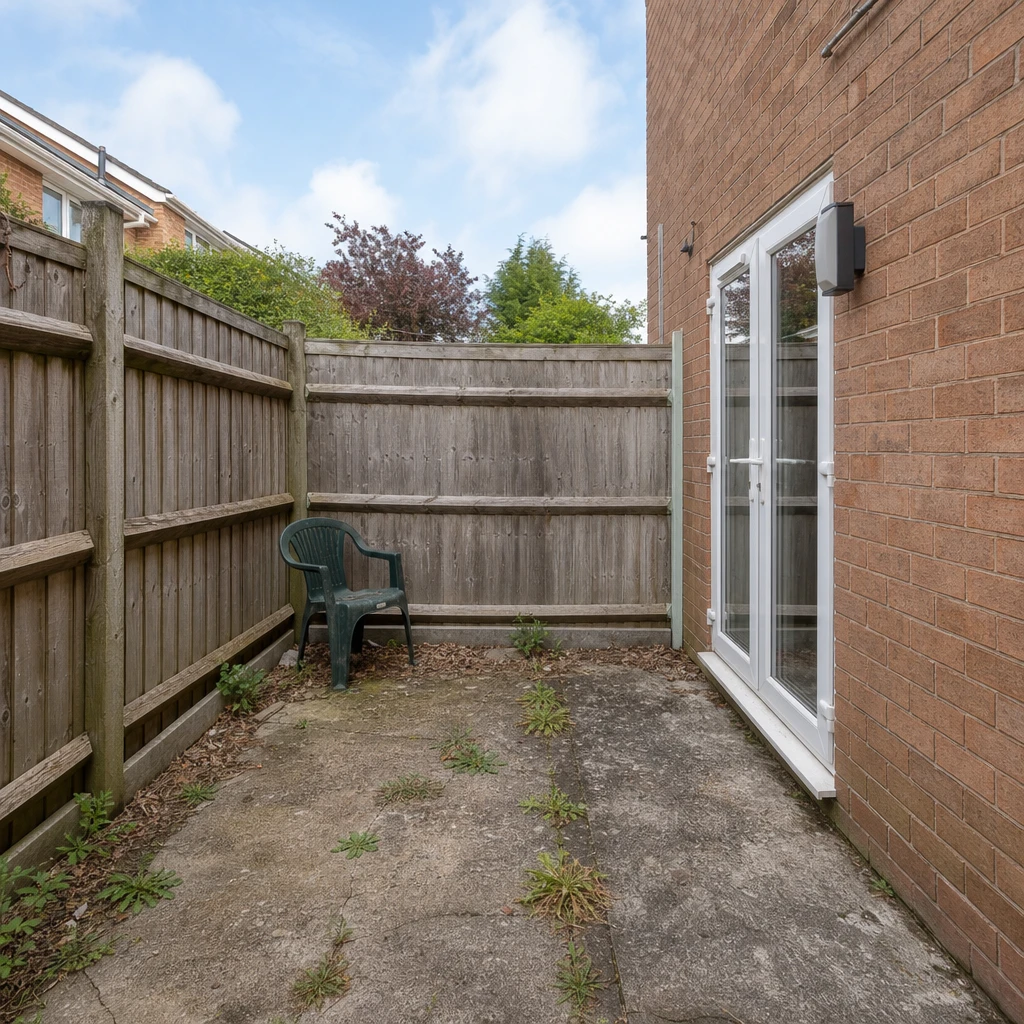
Photograph your garden.
Take a wide photo from the door or window you look out of most.
Start with the layout, then add planting, paths and a place to sit. A guide to designing a garden that fits how you live.
Free to download. Your first 2 makeovers are free. Illustrative AI designs, not construction plans.
 BeforeAfter
Take a wide photo from the door or window you look out of most.
Pick a garden style such as Cottage, Nordic meadow or Zen, then add a path, a pergola, planting or lights.
Slide between your garden and the idea, and save the ones you want to build toward.
The best garden layouts begin with a list of uses, not plants: somewhere to eat outside, somewhere for children or pets, a corner for growing food, a quiet bench for the morning. Each use needs an area, and the areas need to connect.
Draw it badly on paper if you like. Zones first, plants second. A rough plan with the right zones beats a beautiful planting scheme that has nowhere to sit.
Most gardens work with three layers. Zones are the places you use: terrace, lawn, borders, a utility corner. Paths link them and set the rhythm of movement. Edges, such as fences, hedges and borders, give the space its shape.
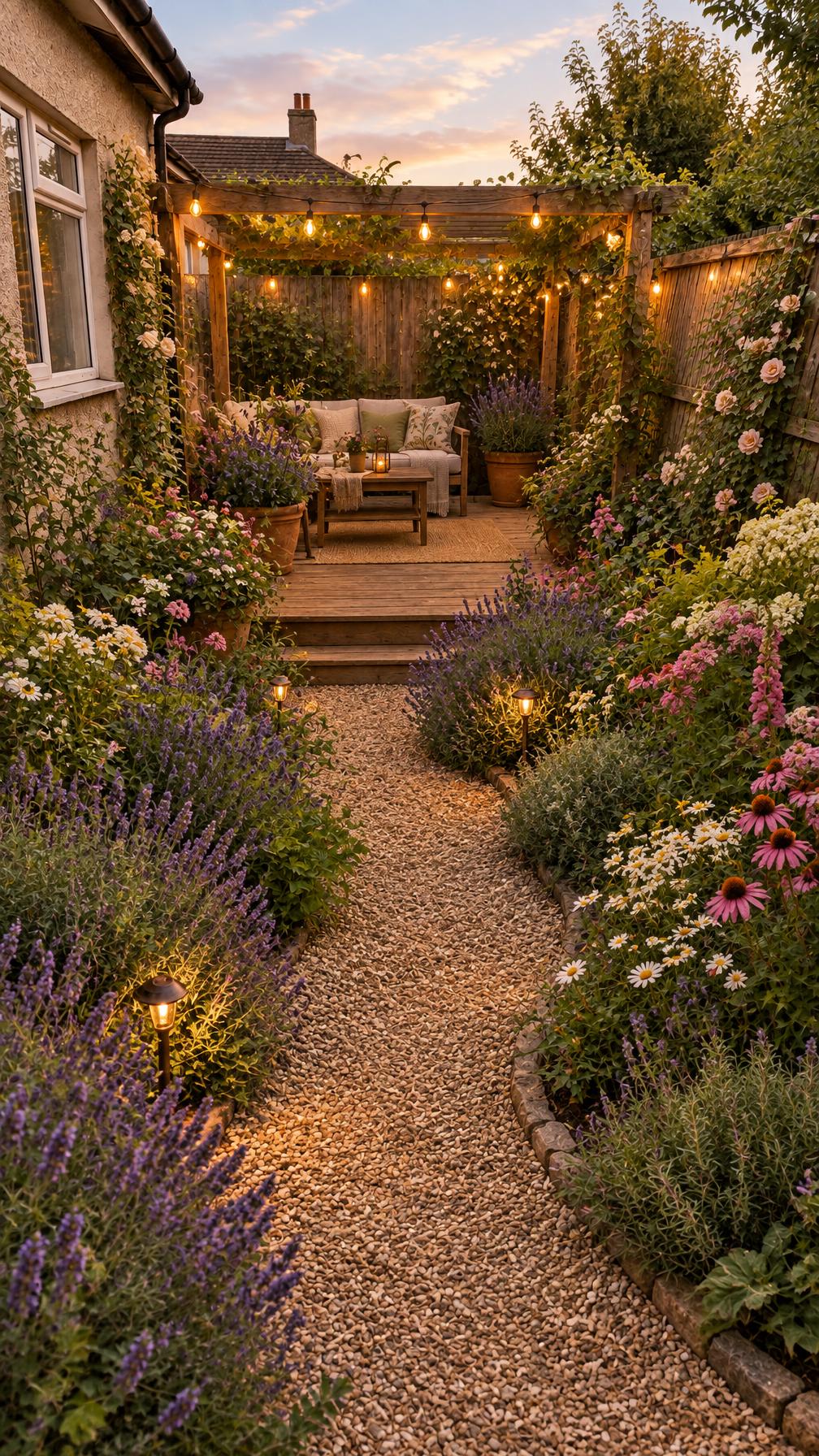
A curving path makes a garden feel longer, a straight one more formal. Planting along the edges rather than the middle keeps usable space open. The garden in the hero does exactly this: a gravel path curves through deep borders to a deck and pergola at the far end. See back yard design for a worked layout of a larger plot.
Choose structure first: a tree or two, evergreen shrubs or hedging for winter shape. Then layer perennials and grasses for seasons of interest, and add bulbs and annuals for color. Repeating a few plants works better than many one-offs.
Check what suits your light and soil before you buy. A local nursery can tell you what thrives; a visual tool can only show you how it might look.
Plan for the whole year: bulbs and early perennials for spring, long-flowering plants for summer, grasses and seed heads for autumn, and evergreen structure for winter. A garden that still looks good in January is rarely only about flowers.
You do not need all of these. Pick the one or two that match how you want to use the space.
The same principles flex with the space. Small garden ideas is about restraint and vertical space. Front yard landscaping ideas is about the welcome and the path to the door. Back yard design is about zones for a bigger plot, and garden landscaping is about planning a larger project.
Ready to see an idea in your own space? Try AI garden design and compare it with your own photo.
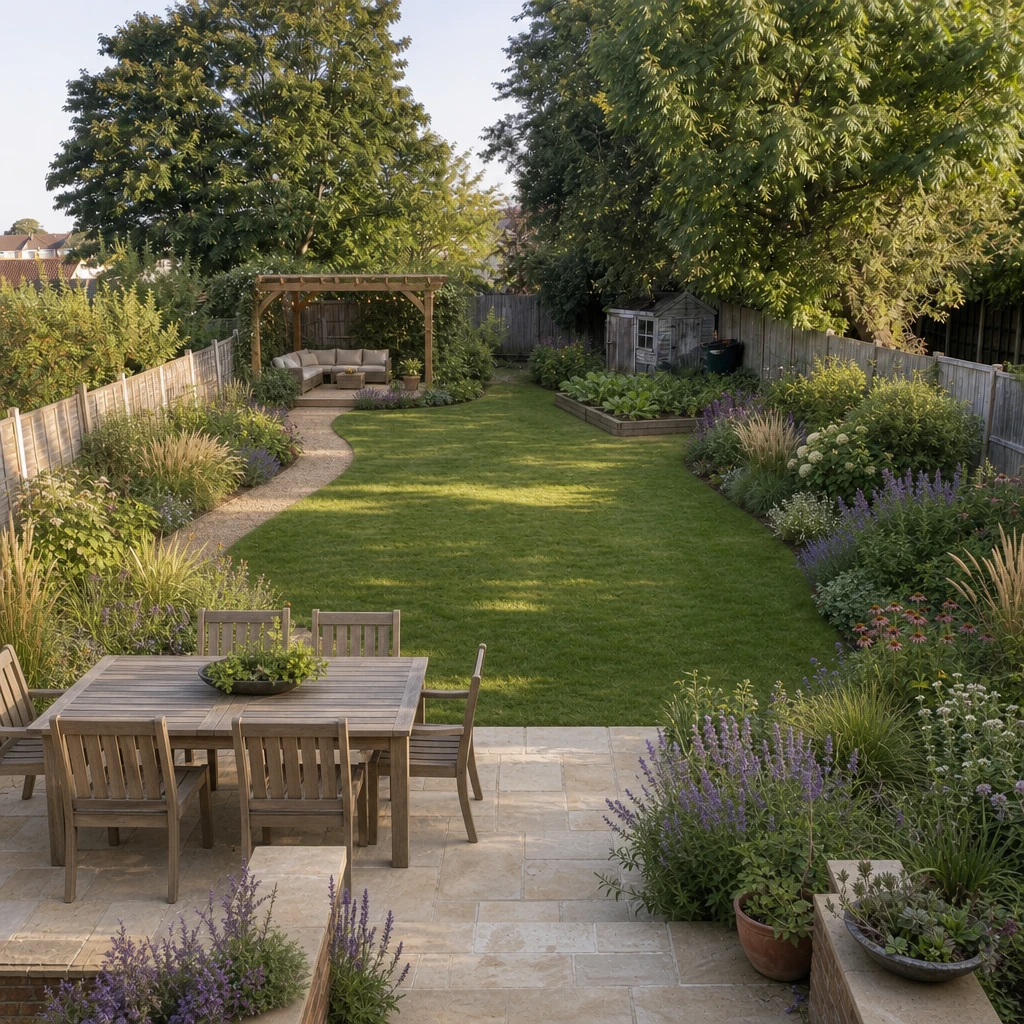
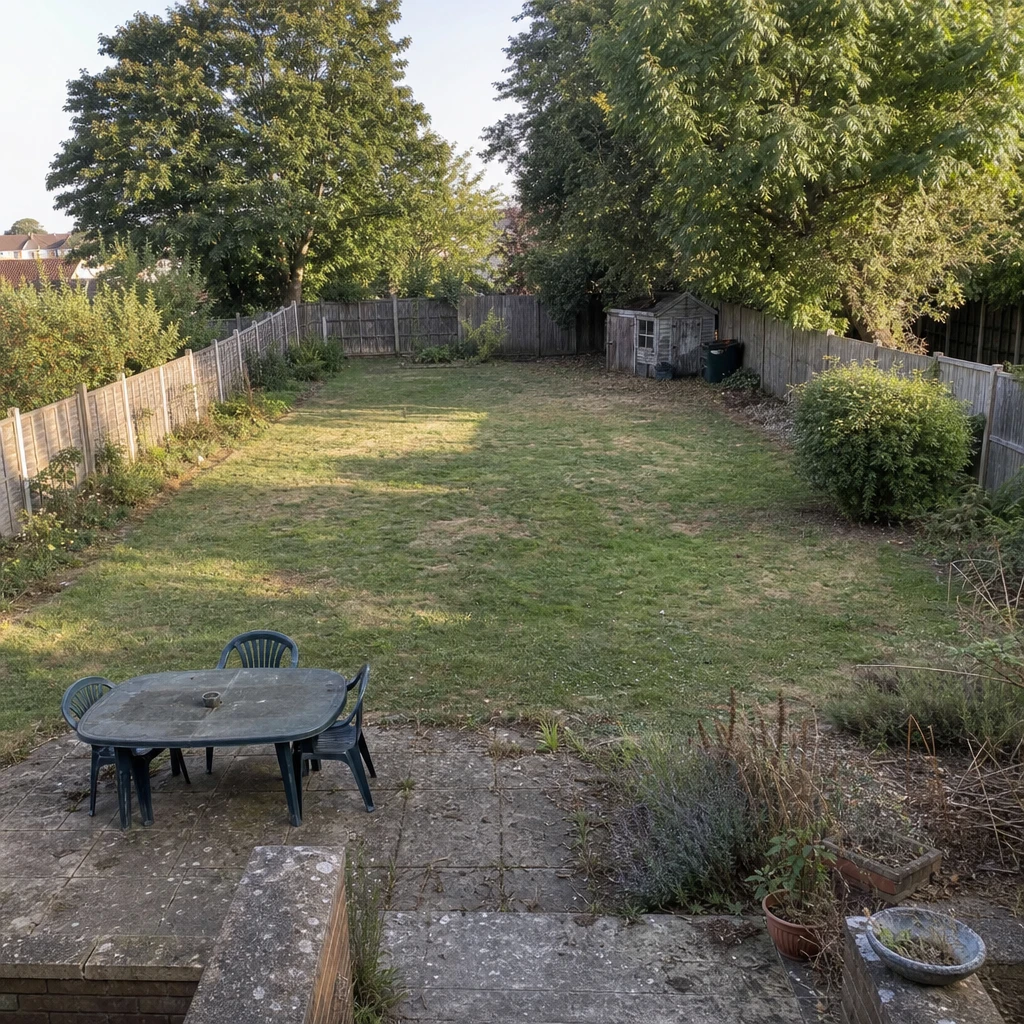
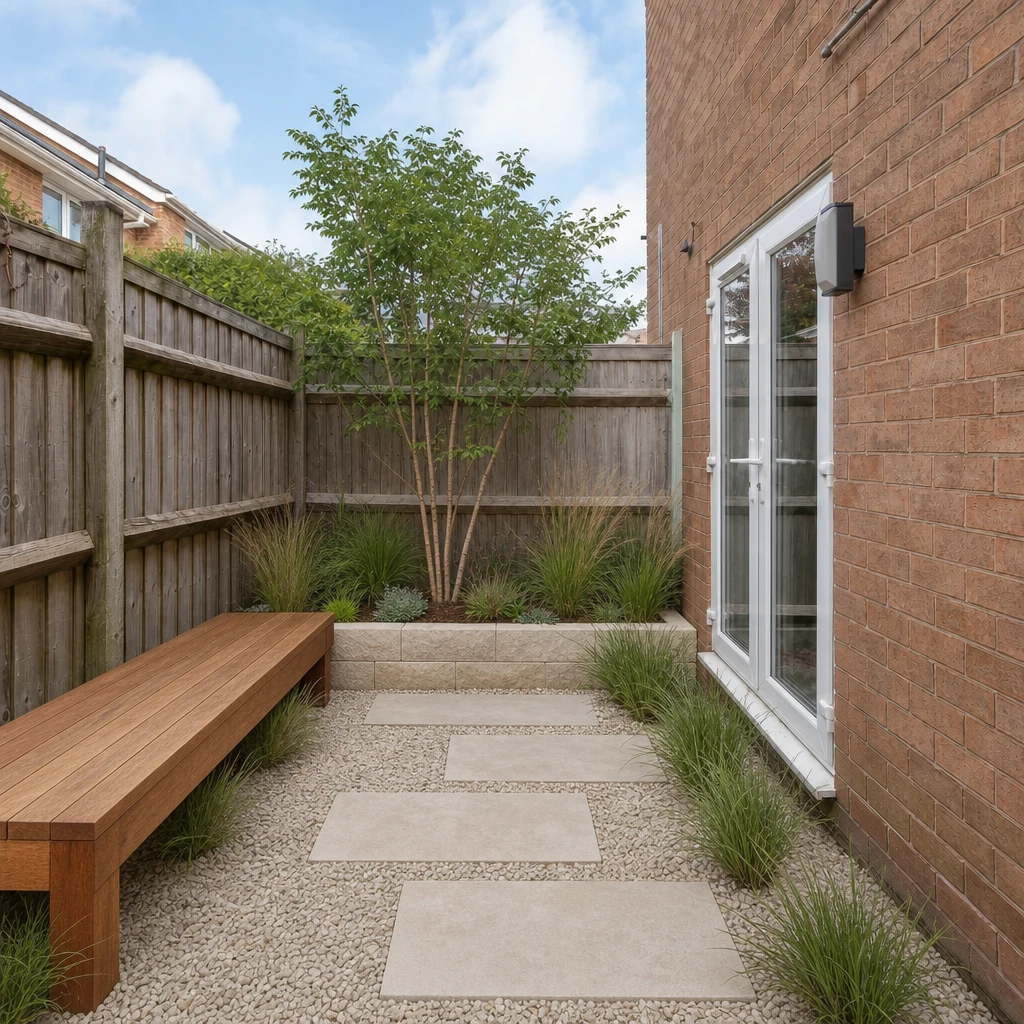
Two starting photos and the AI designs made from them. Slide to compare.
Photograph your garden and try an idea on it. Free to download. Your first 2 makeovers are free.
With how you want to use the space. List the uses (eating, play, growing, quiet), give each an area, link them with paths, and only then choose plants.
Match the shape of the plot. Long, narrow gardens work well with a curving path and rooms along the way; wide ones suit a terrace by the house and a lawn or borders beyond. Keep the middle open and plant the edges.
A defined seating area, a path, and a few plants repeated in groups, such as lavender or ornamental grasses. A clean lawn edge and one or two large pots do a lot for little effort.
Yes. In Omriss you can photograph your garden and try planting, paths, seating and lighting on the photo. The result is an illustrative AI image, not a planting plan.
Whenever you can look at it. Winter shows the structure, spring shows what is growing and summer shows the light. Omriss can show a design in different seasons, which helps you picture the whole year.
There is no rule. A lawn is useful for play and as a calm green space, but it can be smaller than most people assume. Give it a generous, simple shape and let borders and paths do the rest.
Take a photo of your outdoor space on Android and try a planting idea or a place to sit.
The photos you choose are sent securely for AI processing to create each design. See the privacy policy for details.