
01
Photograph from the pavement.
Stand where visitors first see the house and take a photo that shows the path, the planting and the front door.
The front garden is the first thing anyone sees. A clear path, framed planting and a good door do most of the work.
Free to download. Your first 2 makeovers are free. Illustrative AI designs, not construction plans.
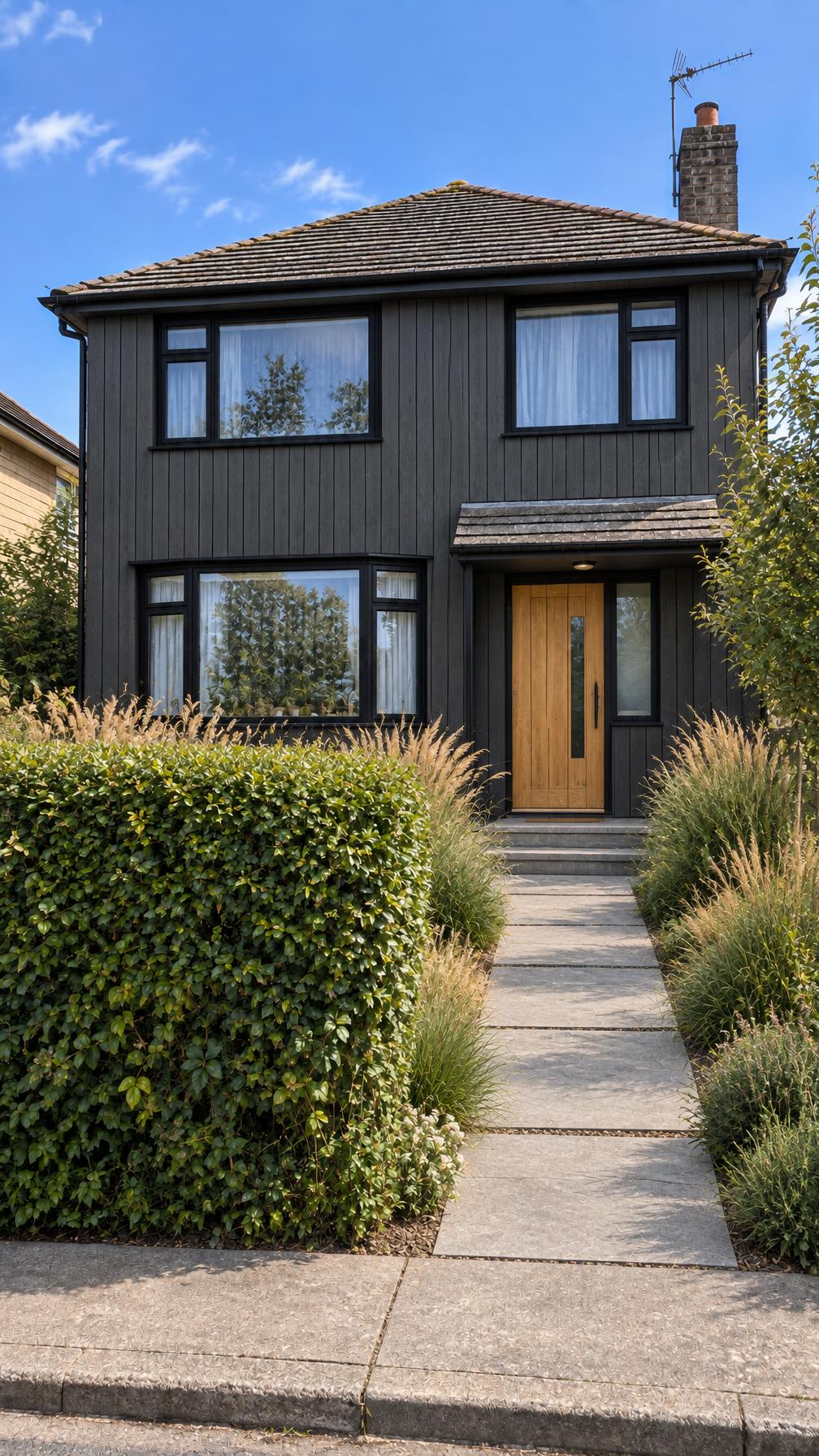 BeforeAfter
Stand where visitors first see the house and take a photo that shows the path, the planting and the front door.
Change the planting, the path or the lawn, then the door and facade colors, one at a time.
Slide between your front garden today and the idea. Keep what works and adjust the rest.
A front garden has one job before all others: show people the way in. A clear, level, well-lit route from the pavement to the door makes a house feel welcoming and safe. Everything else supports it.
In the hero, the old cracked path disappears under overgrown planting. The design replaces it with a straight paved path to the door, with a clipped hedge and grasses framing it rather than crowding it.
Front garden landscaping ideas share one principle: think of the planting as a frame, not a screen. It should lead the eye to the entrance.
Front lawn landscaping ideas start with a question: do you need a lawn at all? A front lawn is traditional, but it is not the only answer. Gravel with drought-tolerant planting, a clover lawn or a wildflower meadow can lower the upkeep, and a Mediterranean mix of lavender, olive and herbs suits many facades. Omriss includes lawn and ground-cover options such as striped lawn, wildflower meadow, clover lawn, moss and creeping thyme, so you can compare them on your own photo.
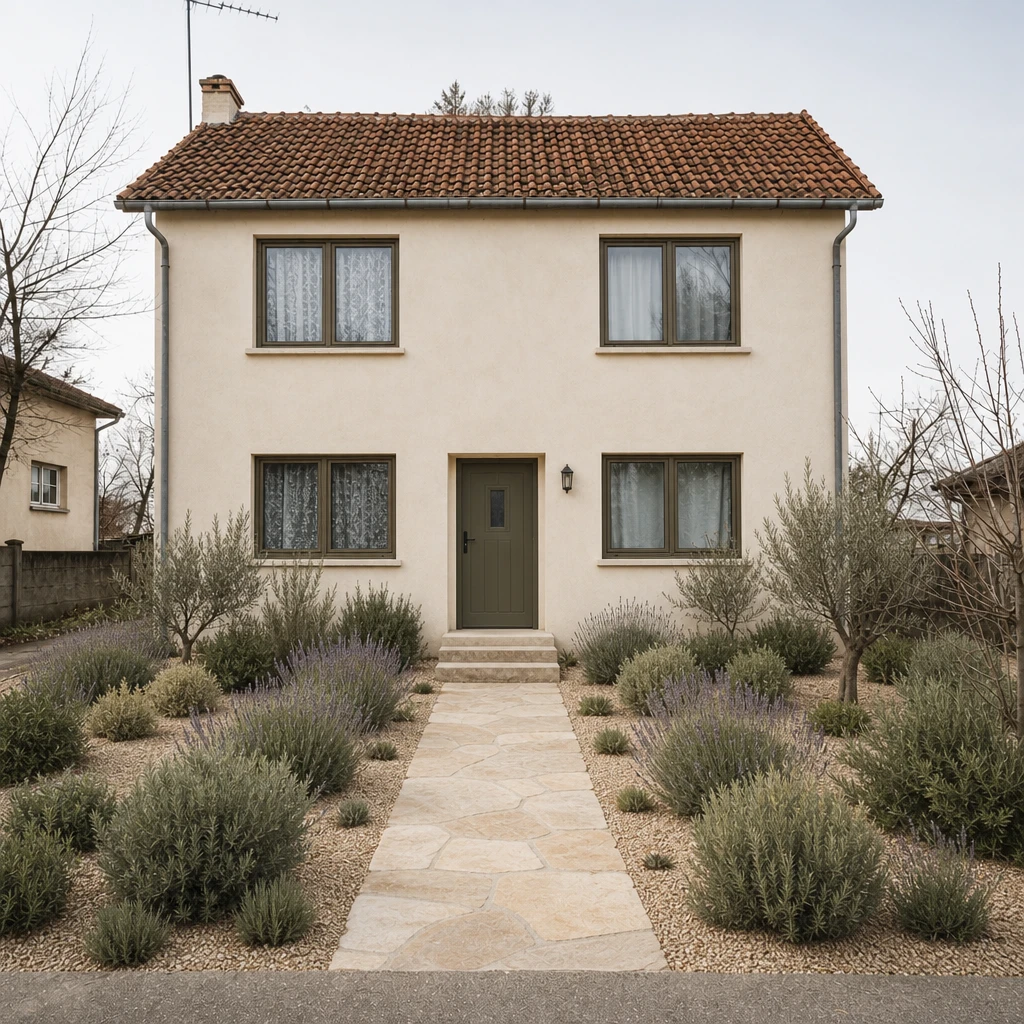
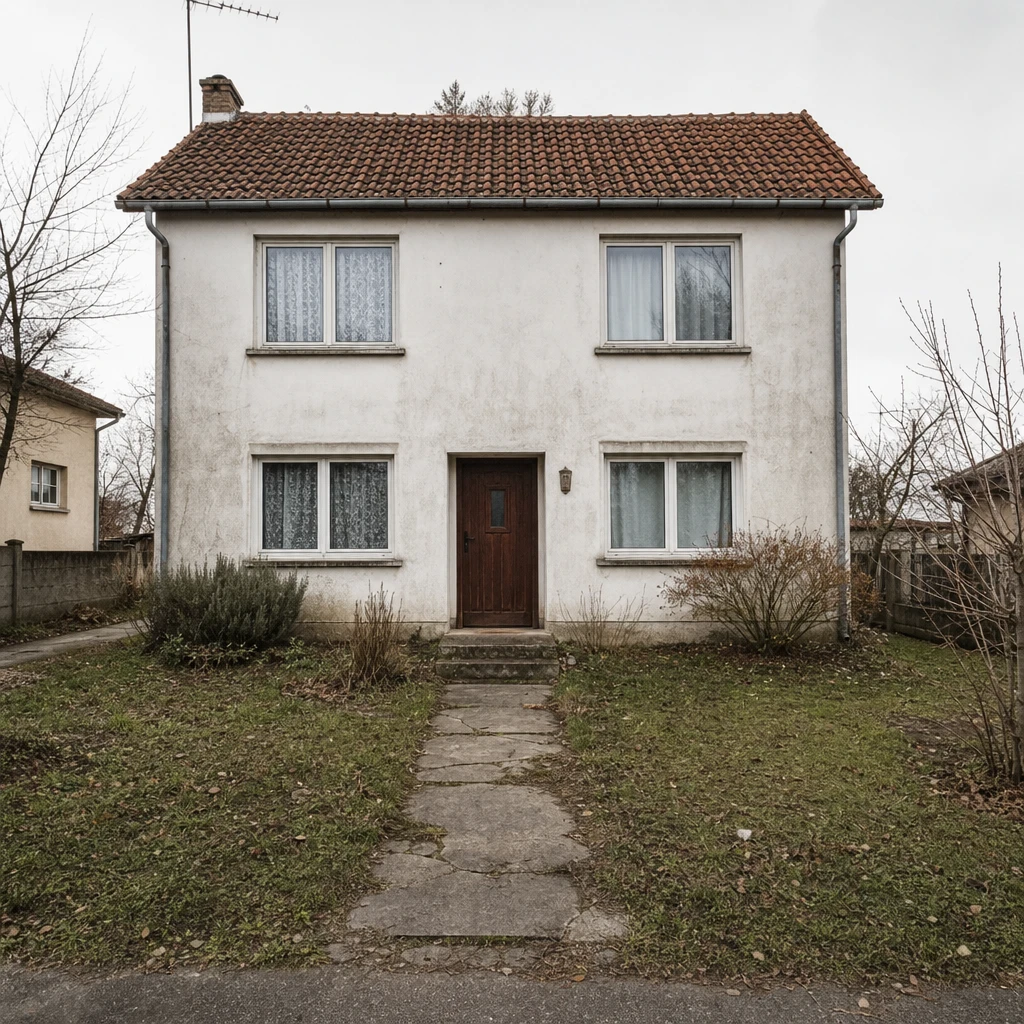
The example below swaps a patchy front lawn for gravel beds, olive trees and lavender, with a flagstone path to the door.
Small things lift a front garden: a door color that stands out, a house number you can read from the street, a lantern by the door and low lights along the path. Try a bolder door color in a picture before you paint. Omriss lets you change the door and see the effect on the whole facade.
Bins, bikes and the meter box are part of the view. Hide them with a screen or planting, or give them a tidy home, so the first thing a visitor sees is the door.
Check local rules before you change front boundaries, hedge heights or driveways, and before removing street trees. Think about where the bins go, and keep sightlines clear for cars and pedestrians. An illustrative picture helps you decide; it does not replace a survey or local advice.
For the house itself, see house front design, and for the wider picture, garden design ideas.
A weathered house with a bare front lawn, and the illustrative design made from it. Slide to compare.
Photograph your house and try a path, planting and a new door. Free to download. Your first 2 makeovers are free.
Define a clear path to the door, frame it with a hedge or layered planting, repeat a few plants, add a light by the entrance and choose a front door color that stands out.
Start with the cheapest wins: tidy edges, a clear path, a few repeated plants, a door color and a light by the entrance. Spend where a change is hardest to make later, such as the ground surface.
Evergreen shrubs for structure, ornamental grasses and perennials in drifts, and lavender or herbs near the path. Check what thrives in your light, soil and climate with a local nursery.
No. Gravel with planting, a clover lawn or a wildflower meadow are common alternatives. Omriss lets you compare lawn and ground-cover options on a photo of your own house.
Yes. Photograph your front garden and try planting, paths and door colors in Omriss, then compare with your original. See AI exterior house design for the house itself.
Choose a few tough plants and repeat them, mulch or gravel the beds, edge the lawn cleanly and avoid delicate plants that need frequent attention. Fewer species in larger groups look tidier and take less time.
Photograph your front garden on Android and try a path, planting and a new door.
The photos you choose are sent securely for AI processing to create each design. See the privacy policy for details.