
01
Photograph the front.
Stand across the street and take a straight-on photo that shows the walls, the door and the garden.
The entrance, the colors and the cladding decide how a house looks from the street. Here is how to approach each, and how to try them first.
Free to download. Your first 2 makeovers are free. Illustrative AI designs, not construction plans.
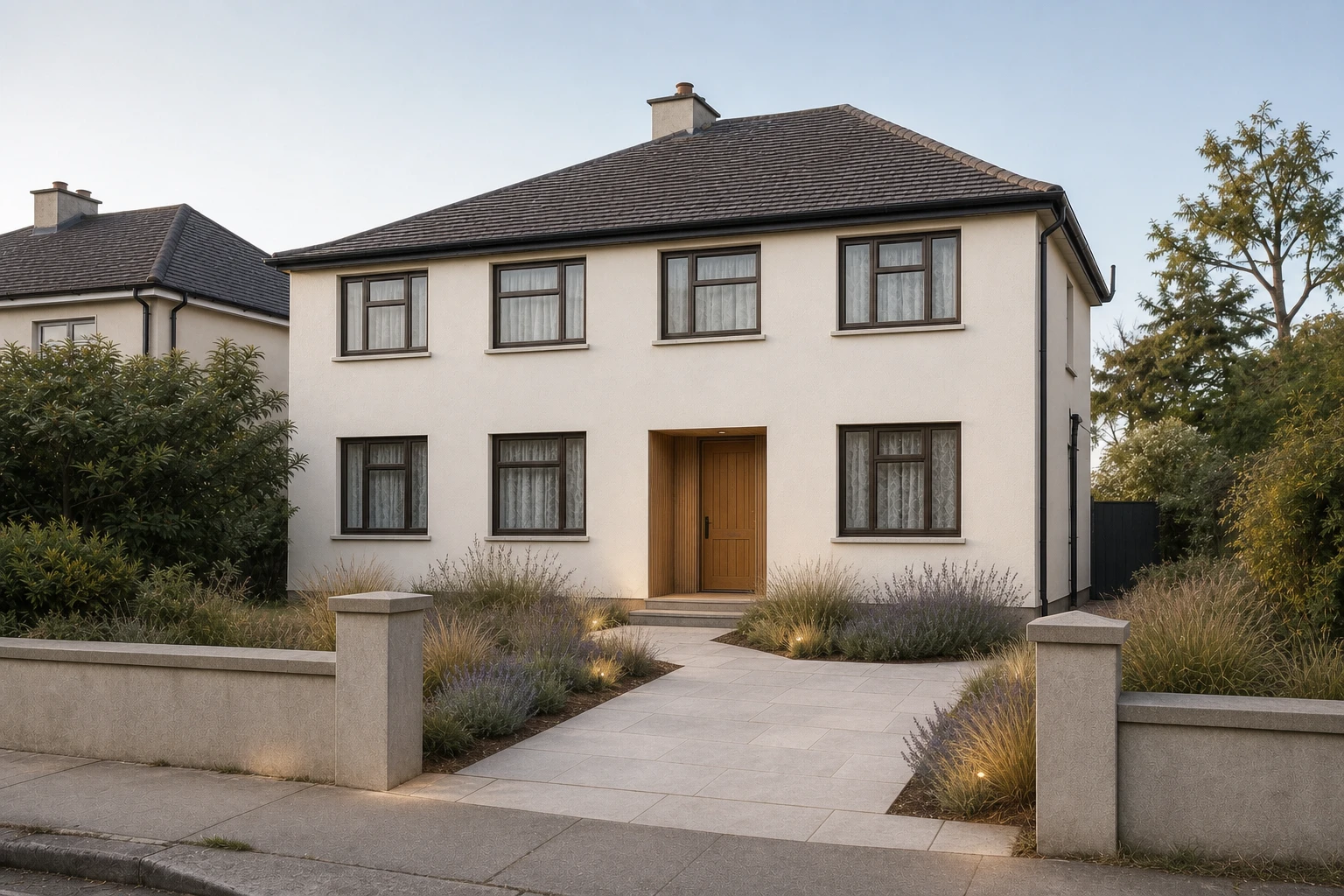 BeforeAfter
Stand across the street and take a straight-on photo that shows the walls, the door and the garden.
Try new wall colors or cladding, window frames, a front door and the planting in front of the house.
Slide between your house today and the idea, and keep the combination that works.
A house front is a handful of elements: the walls, the roof edge, the windows, the door and entrance, the path and the planting. Home front design is mostly a matter of deciding which of these to change, because changing all of them at once rarely works.
In the hero, the house keeps its shape and its roof. The walls become cream render, the window frames go dark, the door becomes oak, and the front gets new paving and planting. Five decisions, and the house reads as a different place.
If you can only change one thing, change how the house says “come in”.
Use three: a base for the walls, a darker or lighter tone for frames and trim, and one accent for the door. Warm whites and creams suit most houses; greens, greys and charcoals are popular for frames and doors. Look at your color next to the roof, the brick and the pavement, because those are not changing.
Colors read very differently on a screen and on a wall. Use a picture to find direction, then paint a real sample and check it in morning and evening light.
Render, brick and timber are the usual choices for the house front itself. Timber, even on part of the facade, adds warmth; render gives clean planes; limewashed or painted brick softens a harsh color. “House front wall design” can also mean the boundary wall at the front of the plot. The same logic applies: choose one material, keep it low enough to see over if you want a welcoming feel, and plant against it.
For the garden side of the front, see front yard landscaping ideas.
Changes to a house front can need permission, especially in conservation areas or on listed properties, and some places restrict colors, materials and boundary heights. Ask your local authority or a qualified professional before you start.
An illustrative picture helps you decide what you want; it does not show whether it is allowed or buildable. For the wider choice of styles, see exterior home design styles, or try AI exterior house design on your own photo.
A bungalow with orange-brown brick, and the AI design made from it. Slide to compare.
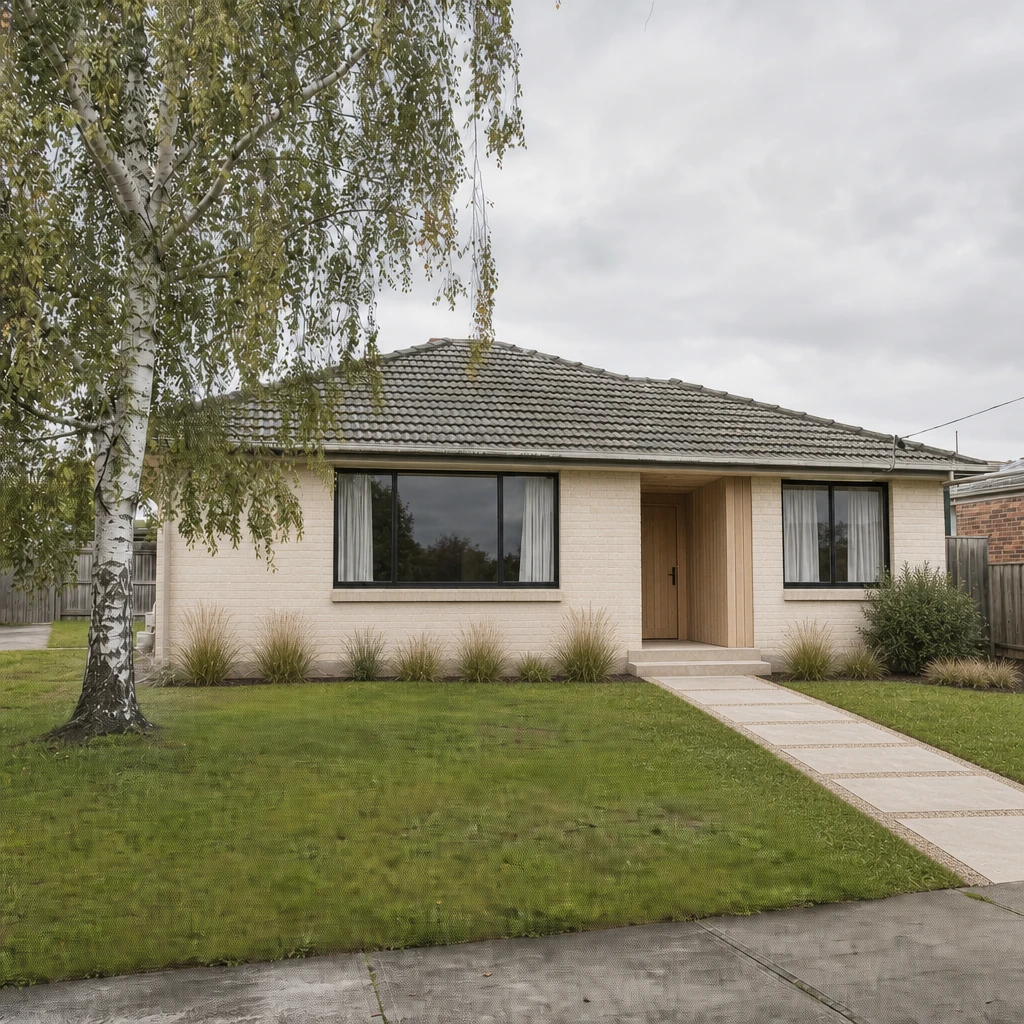
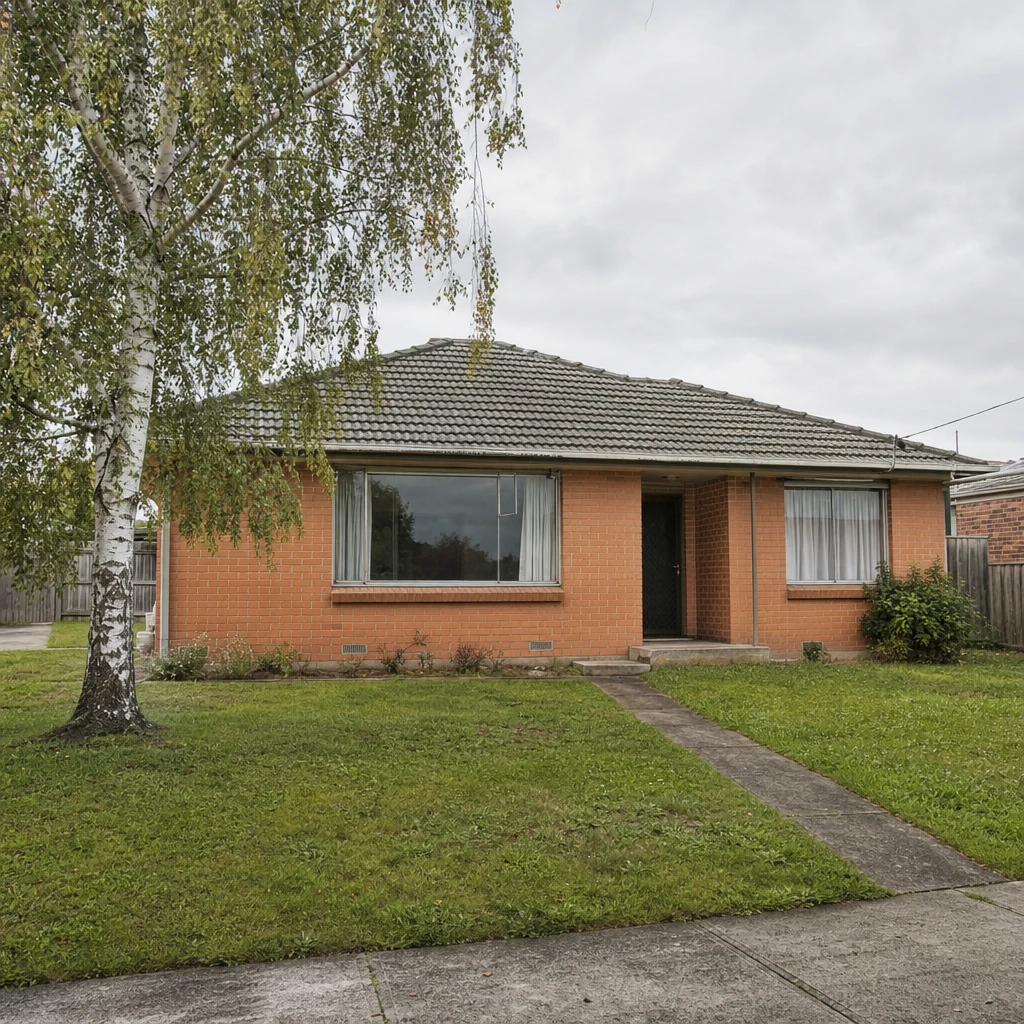
Photograph the front and compare colors, doors and cladding. Free to download. Your first 2 makeovers are free.
Change the front door color, tidy the path and planting, add a light by the entrance, and repaint or clean the walls. These make the biggest difference for the least change.
Aim for three: a base for the walls, a tone for frames and trim, and one accent for the door. Check them against the roof, brick and pavement, which will not change.
Render, brick and timber are the common choices. Many facades combine two, such as render with timber on one section. Choose by the house’s style, the climate and local rules.
Yes. Omriss lets you photograph the front of your house and try colors, cladding, doors and planting, then compare with the original. The result is an illustrative AI image, not a drawing.
Sometimes. It depends on where you live and the type of property, and areas such as conservation areas often have stricter rules. Ask your local authority or a qualified professional.
It can, for a calm look, or contrast for a focal point. A common approach is dark frames with a warmer door, so the entrance stands out without fighting the rest of the facade.
Photograph your house on Android and try a new entrance before you pick up a brush.
The photos you choose are sent securely for AI processing to create each design. See the privacy policy for details.